It's the 28th Sunday already, and I'd like to write down here those insights that have since stayed with me since the 21st Sunday when Jesus responded to the question "Lord will only a few be saved?" - STRIVE TO ENTER THROUGH THE NARROW DOOR! Since then, my Sunday reflections for the homily have been guided by this striving to enter and live inside this Narrow Door - Christ!
21st Sunday - Strive to enter through the Narrow Door. I had this chance way back year 2000 at the Shrine of Mount Carmel. It was a Sunday then, and many people went there: people with blond hair, white hair, black hair; tall, short, man, woman, child, people in pants, people in skirt, people of all colors, races, yes for that was the year Pope John Paul II went to the Holy Land and I was blessed to have been given that once in my lifetime trip (I hope I can go there again, God willing). We were lined up, cueing for our time to see the tower of the Shrine. Everyone was shoulder to shoulder, elbow to elbow, and moving slowly in. And Lo! The door was shut right before my face. And I remembered the Gospel where Christ was supposed to have told His disciples that it will indeed be shut. Woe is me! I said. I was moved to tears at that experience. What if this really took place when I am about to enter heaven. I just prayed and hoped that moment won't happen. Meantime, I waited with the rest. I stayed put, waited, and thoughts came as time passed by. Soon enough the door was opened again, and I was able to enter that door. We went up and Lo! What a beautiful sight. Up in that tower was a sketch such that if you see North certain places in Israel can be seen; the same with the South, East and West. Waah!! If the door did not open, I would have missed this chance of a lifetime. But that experience made me realize the generosity of God. Yes, my entry through that door was through the mercy of God. That made me realize that for as long as I wait, the door will be opened, and He will let in those who have patiently waited. Hence, Christian life is really a life through the mercy and love of God Who in His Son has invited everyone to come and enter through Him, the Narrow Door.
The 22nd Sunday showed us Jesus dining in the house of one of the leading Pharisees in His time. He said there: "When you're invited to a wedding banquet, recline not in the place of honor at table lest a more distinguished guest come up and you be told to step back to give way..." That Sunday gave me the thought of our self-importance often coming with us. Now that we're inside the Narrow Door, it may be of great help to learn to place ourselves in such a way as to be given importance, and not to aggrandize that importance on ourselves, lest we be embarrassed. The human person can indeed be vulnerable to this because each one craves to be given that importance. And He has indeed given us that importance. He has given us His only Son. Before God, we are important or else, how could He have decided to offer us His live in His Son Jesus? Indeed, none of us in Christ can say we are not important. We have been given such value as to be ransomed at such a price: His Blood! Christian life then is a celebation of being given that importance such that we don't have to take upon ourselves that importance in case we may feel we haven't been given so. The word humility really brings the idea clearer: humus or soil from which we have been created. We have been raised from the dust, so to say and been breathed on His own Spirit that cries inside of us Abba Father, as His Son Jesus cried our Abba Father to the One Who sent Him.
On the 23rd Sunday, a challenge was posed. Jesus told His disciples that "if anyone comes to me without hating his faher, mother, wife and children, brothers and sisters, and even his own life, he cannot be my disciple. Whoever does not carry his cross and follow me cannot be my disciple." Then He spoke of two parables: one about someone who wanted to build a tower and needed to assess one's resources before doing so lest he not finish it and be jeered at; the other was a king who was to wage war with another king who had more forces than his own. That Sunday made me think that indeed, while we're still close to the door, we can still make a choice: are we really in, is this really what we want? Or, if we don't think so, we can still exit. The Door is not far away yet, so to say. Yet, come to think of it: our entry has been out of His generosity. Our survival, growth and happiness inside that Narrow Door will also be due to His ongoing mercy and love! He will supply whatever we lack. It is important that whatever we meet while in, we learn to trust in Him Who has more than we can ever think of. Carrying ones cross and following Him is learning to accept the reality of life without fear, and with realism learn to entrust to Him Whom we follow. We do our best, He does the rest.
The 24th Sunday had the whole 15th chapter of St. Luke's account of the One Gospel: Jesus Christ. My thoughts then were these: (a) like the coin the old woman looked for, our being found was to be so essential. Had the woman not found that coin, she would not have been able to buy what she wanted. It's as if, if we were not found, we continued to be lost, God would not have become really God. Money that is not exact can't buy anything. God without mercy and love is not yet the God Who is Mercy. (b) The lost one's value is equal to that of the 99's. The Shepherd went out searching for the lost one while having the fact that he still had 99! No, one less is not his joy. Joy is greater at finding the lost one! For the lost one is equal to the 99 who are left waiting. And each one among the 99 can be given such an importance and value. Well, there is no need to give the Shepherd such difficulties at finding us by allowing ourselves to be lost only to be found?! If only we learn what difficulties the lost one has gone through! (c) The Parable of the Prodigal Son really tells us what the lost one goes through. And God very well understands, He waits on us, runs to us and gives us back our dignity as beloved, celebrating our having been found in conversion! Oh what a life inside the Narrow Door we have been allowed entry into!
The parable of the Sower was proclaimed on the 25th Sunday this year. As we live deeper after we have been allowed entry into the Narrow Door, God continues to sow in us His life-giving Word. He talks to us in our lives, and when we let His Word live in us, we are letting that Word bear fruit in us. The other types of soil on which the Word fell are challenges for us to learn about ourselves. And HE gives us a choice: to be the fertile soil borne out of fidelity. Or to live in doubt and fear, to live in hard-heartedness and unforgiveness. If only we are generous enough to let His Word grow in us through a faithful life!
Indeed, life inside the Narrow Door can be very challenging! Yet, the Gospel of the 26th Sunday showed us a rich man (without a name) and Lazarus, the beggar living outside the rich man's house's gate. The parable was addressed to Pharisees, and these are the thoughts I had then: (1) the disparity between the rich and the poor appear symbolic of the rejection the Pharisees did to those who were classified as "sinners." This disparity between heaven and hell was also demonstrated, hence, already from the perspective of the Pharisees, no one gets to the other side. (2) I thought it was really unfortunate for the rich man to have not even given the poor man even just a look. I think this takes place when there is some internal obstacle. When I look back at my own experience, this difficulty comes when one has resolved to no longer allow oneself to be hurt by the other, or maybe fooled by the other. I just thought of the many times beggars came and asked for some aid, and some of them really came armed with fake prescription papers. They say they want medicines, but actually they need money. When someone gets hurt by the other or gets fooled, the tendency is to keep the other out of one's life such that even a glance becomes too difficult to do. Had the rich man even given just a look at the poor man, he may have had experienced already here on earth the "drop" of water he was asking Abraham for Lazarus to drop on him. (3) The challenge then for us who are "in" the Narrow Door is to learn compassion which can only take place when we shall have known what is deep inside us. Let me end my reflection here for a while. I shall write some more on this in the coming days. God bless
Sunday, October 14, 2007


Wednesday, May 16, 2007
A little while you will see me...not see me
Today's Gospel is taken from Jn 16:16-20:
Jesus said to his disciples: "A little while and you will no longer see me, and again a little while later and you will see me." So some of his disciples said to one another, "What does this mean that he is saying to us, 'A little while and you will not see me, and again a little while later and you will see me,' and 'Because I am going to the Father'?" So they said, "What is this 'little while' of which he speaks? We do not know what he means." Jesus knew that they wanted to ask him, so he said to them, "Are you discussing with one another what I said, 'A little while and you will not see me, and again a little while and you will see me'? Amen, amen, I say to you, you will weep and mourn, while the world rejoices; you will grieve. but your grief will become joy."
Upon reading this text, in fact every time I do so, I always think of children when our parents were testing our hearing and doing skills (auditory-manual or action coordination) and actually showing us the CLOSE-OPEN-CLOSE-OPEN while actually doing the actions with their palms. I don't know if Jesus is trying to insert humor here at his impending death, and the loss that the disciples will experience. Is this his way of balancing our way of living, i.e., in anxiety, broaden the perspective; do not get stuck with what is there for there will be something more. Be open, in other words. For indeed, suffering will have to be taken the way it is if we are ever to really overcome it. Denial of suffering was not what Jesus wanted us to have. Suffering has a purpose, and trust in God the Father is better than being trapped in the moment.
The other picture I see whenever I read the above text is related to Piaget's Object Permanence theory. Here is a picture which I got from this site: http://wondertime.go.com/learning/article/putting-the-fun-in-peekabo.html
 By Object Permanence is meant an understanding or belief that objects and events continue to exist even when they cannot directly be seen, heard & touched. The peek-a-boo play with kids shows this reality, i.e., try to hide something from a baby, and when the baby tries to look for what was hidden, the said baby has object permanence. While this is part of the child's cognitive development, it has implications for our faith experience. Object permanence seems to create in us a sense of security that even if we don't see something, especially when it is hidden from our sight, what we only need to do is search and we will find it. There really is no need to be too anxious that what was hidden is lost. The belief that something we saw continues to be even beyond our sight is an indication that it has been installed in us, and we can learn patience, trust, and most especially happiness when it is shown again.
Whenever I play peek-a-boo with my little nephews and nieces, and even any child for that matter, and I see the glow in their eyes, as if at first wondering where I went, and then when I show myself again I see the smile and laughter in the child, I always feel the joy of security and peace. This can become our peace as we live even without seeing Jesus the way we see others as we live in this world.
God bless us all
Jesus said to his disciples: "A little while and you will no longer see me, and again a little while later and you will see me." So some of his disciples said to one another, "What does this mean that he is saying to us, 'A little while and you will not see me, and again a little while later and you will see me,' and 'Because I am going to the Father'?" So they said, "What is this 'little while' of which he speaks? We do not know what he means." Jesus knew that they wanted to ask him, so he said to them, "Are you discussing with one another what I said, 'A little while and you will not see me, and again a little while and you will see me'? Amen, amen, I say to you, you will weep and mourn, while the world rejoices; you will grieve. but your grief will become joy."
Upon reading this text, in fact every time I do so, I always think of children when our parents were testing our hearing and doing skills (auditory-manual or action coordination) and actually showing us the CLOSE-OPEN-CLOSE-OPEN while actually doing the actions with their palms. I don't know if Jesus is trying to insert humor here at his impending death, and the loss that the disciples will experience. Is this his way of balancing our way of living, i.e., in anxiety, broaden the perspective; do not get stuck with what is there for there will be something more. Be open, in other words. For indeed, suffering will have to be taken the way it is if we are ever to really overcome it. Denial of suffering was not what Jesus wanted us to have. Suffering has a purpose, and trust in God the Father is better than being trapped in the moment.
The other picture I see whenever I read the above text is related to Piaget's Object Permanence theory. Here is a picture which I got from this site: http://wondertime.go.com/learning/article/putting-the-fun-in-peekabo.html
By Object Permanence is meant an understanding or belief that objects and events continue to exist even when they cannot directly be seen, heard & touched. The peek-a-boo play with kids shows this reality, i.e., try to hide something from a baby, and when the baby tries to look for what was hidden, the said baby has object permanence. While this is part of the child's cognitive development, it has implications for our faith experience. Object permanence seems to create in us a sense of security that even if we don't see something, especially when it is hidden from our sight, what we only need to do is search and we will find it. There really is no need to be too anxious that what was hidden is lost. The belief that something we saw continues to be even beyond our sight is an indication that it has been installed in us, and we can learn patience, trust, and most especially happiness when it is shown again.Whenever I play peek-a-boo with my little nephews and nieces, and even any child for that matter, and I see the glow in their eyes, as if at first wondering where I went, and then when I show myself again I see the smile and laughter in the child, I always feel the joy of security and peace. This can become our peace as we live even without seeing Jesus the way we see others as we live in this world.
God bless us all
Sunday, April 08, 2007
Why Christ had to Rise from the Dead
It was JUNE 19, 2006 when I wrote this entry here:
The Easter Season of this year 2006 has been quite impactful for me as a Catholic priest. While I admit having studied and learned my theology in the Chinese language, this year was my first time to encounter the difficulty understanding the Resurrection. Hence, in one of my reflections, I remember having asked the Lord "Why did you rise again from the dead?"
It was the Sunday before Ascencion Sunday, and the text from the Gospel of St. John rang so loud in me: "As the Father has loved me, so I have loved you. Remain in my love. You will remain in my love if you do what I command you...My command for you is this: that you love one another...as I have loved you...and your joy will be complete."Human loving seems to be quite romantic, but selfish. My experience in the clinic assessing marital cases for declaration of nullity by the civil and Church courts has shown to me what human loving is all about: it can be filled with passion and desire, but as the years go by, love dries up. Our human friendship also shows the fickle nature of love. Once one of the parties starts to show some negative traits, a gap starts to creep in between the bond. Human loving seems to last for only as long as the other remains to be good. But when the other starts to hurt the other, the love is challenged. If we love the way we love, we most likely would fall out of love.
I was once assigned for chaplaincy at Lourdes Hospital. At 6AM, the phone rang from the emergency. A man was being revived by the nurses and doctors at the emergency room. The wife was busy picking the pockets of her husband's shorts as the doctors were pumping the chest of the man. I busied myself anointing the man. As soon as the doctors stopped and told the woman that her husband is gone, the wife started crying out with these words: "You said you'd love me and wouldn't leave me. Now where is your love. I cannot believe in your love anymore." This incident showed to me what death can do: death can falsify love!!!
AHA! Now I know why Christ had to rise from the dead! The Father has risen His only Son back to life because that was the only way to show the world what LOVE REALLY IS: It calls the dead back to life. The love of God is such that it can wait for the dead to rise back to life. And only the one who loves also rises in obedience to the One Who loves and calls him back to life.
No wonder the Church always goes back to the table of the Eucharist because it is here where each member receives the One Who can love with us as He loved us. It thus becomes possible to say in the words of St. Paul: "The life I live is no longer mine. It is Christ Who lives in me." Each one is gifted with the call to rise from our deaths and daily dying.
May we love as Jesus has loved us.
I find this original more dynamic than the one I shared in my Easter homilies this year 2007. But what I did add was this thought: that Christ rose from the dead because that was the only way to show the truth of love. Death erases love. With the victory of death (read: Christ not rising from the dead) love would have easily been nullified. Love without Christ rising from the dead would simply be fooling the other. Yet we all know how we strive to make our love real and long-lasting, but with the reality of death, and if God is not there, our efforts prove to be rather futile. The purely human situation apart from Christ can be quite doomed. Each person only wins the first prize of death, and remains there 6-feet below the ground!
It is thus hopeful to be shown the Resurrection: for with Him rising from the dead, love can really be love. The divine nature of being love, loving becomes self-evident. This reminds me of the Scriptures which says "Not for your sakes do I act, house of Israel, but for the sake of my holy name...I will prove the holiness of my great name...thus the nations shall know that I am the Lord, when in their sight I prove my holiness through you... (Ez. 36: 16-28 - I don't exactly know which numbers are these quoted verses since I am only copying from The Vatican II Sunday Missal).
It really is very consoling to have at least an insight into the Resurrection. May we live life as we have been given this: "life is called to live"
Friday, April 06, 2007
Thursday, April 05, 2007
Fr. Madhu & The Agony in the Garden
It's been quite some time since my last entry here. Actually, what stirs me to write here is my confrere who's right down there lying in state. Fr. Frans Madhu was killed last Palm Sunday Barrio Mabongtot, about 4 hours walk from his parish in Lubuagan, Kalinga. He arrived here in the Philippines last Palm Sunday 2005. What a coincidence? He did come full circle in only two years!!! On that fateful afternoon of Palm Sunday 2007, April 1 to be exact, his life was taken away from him sans any motive!!! I heard that comment quite a few times from the confreres who brought his body last Holy Wednesady from his place in Kalinga down here in CKMS for burial come Easter Monday.
One Claretian sister was supposed to have commented yesterday afternoon that her uncle and nephew were murdered last November 2006 by Fr. Madhu's assassin. What has kept that man scot free during these five months? I heard that the police assigned there could not simply do that - for fear that there would be a tribal war? Where's the connect?
What really interests me most is this: Fr. Madhu mentioned about his fears to some confreres - at least 2 of them - and I talked with them about his fears. These fears appeared to be kind of unfounded. Last December, in a conversation with Fr. Alphonse, he mentioned he was afraid for his life. He texted Fr. Alphonse three times after that short talk - once when he was on the bus on his way to Kalinga, another time some two hours later, and a third time upon arriving Kalinga. His text message always carried that line: "Please pray for me..." Wasn't that ominous enough?
Fr. Siervas mentioned that once last January this year Fr. Madhu himself went straight to his room in Urdaneta to tell him about his fear. What that fear was all about he never really got to say apparently. But there was this lingering fear. This sounded to me like Jesus on His Last Thursday experience at the Garden: He agonized at the thought of a violent death. Was it this type of fear that Fr. Madhu experienced? It made me ask this question: What is death then for? What makes us scamper in fear at the thought of death?
Maybe I'll keep these thoughts here for a while. The truth is: there is a need to resolve this killing, or else it may provide fuel for some more serious crisis up there in Kalinga between the tribes in Mabongtot and Lubuagan. That CICM priests and even diocesan priests have been killed there and that their bodies have not been found since then - aren't these sufficient enough to keep the police more courageous to do their jobs! Or else how else are we to be freed from fear? Well, for one, guns aflourish in that place as if there were no gun ban these days! HAAH! Really scary!
Sunday, February 04, 2007
PIP: Peter, Isaiah & Paul
Wow, the last entry I saw made here was last Dec. 18, 2006? That was more than a month ago! Whew! Mea culpa. I allowed myself to be busy with a lot other tasks instead of sharing here what were in my mind.
But today was particularly beautiful. Just look at the readings, and realize how beautiful the implication for us is as individuals.
The First Reading speaks about Isaiah's experience of seeing the Lord, and yet realizing one's being of unclean lips and also "living among a people of unclean lips" (Vat. II Sunday Missal, 1973, pp. 200), he experienced the purifying mercy of the Lord. "One of the seraphim flew to me, holding an ember which he had taken with tongs from the altar. He touched my mouth with it." (The scene is supposed to elicit pain since fire does burn!) But what do we get instead? "See, now that this has touched your lips, your wickedness is removed, your sin is purged." WOW! Wasn't that great?!
Paul's experience is even more fantastic. Imagine a killer of Christians given a parole by the Lord. Paul was on his way to Damascus for more Christian killing, but instead he got a mild lash from the Lord. All this now is past, and Paul has since become the foremost proclaimer of the mercy and love of God in Jesus Christ!
Peter's is really very personal. We might think that Isaiah's and Paul's experiences might have been fantasy at the least, or maybe guilt-ridden the most, but Peter's was up-close and personal. Jesus Himself was right there and then, in flesh and blood, asking him to throw the net again. "Duc in altum," as has been quoted in the millenium letter/document of Pope JP II.
What do we get from these experiences of PIP?
Despite their being sinners, killers and wicked, they have been given the chance through the mercy of God! They have seen for themselves God's salvation, never really intending to kill out of wrath, but giving the chance to make up for lost chances to give life and share life.
Fr. Cantalamessa, the papal household preacher wrote in his commentary for today's Gospel something worth quoting here. He spoke of two perspectives in looking at "fishing and shepherding" which Jesus gave Peter, and I guess Isaiah and Paul too, albeit using different terms perhaps. Fr. Cantalamessa said that from the perspective of human experience, the world shows us that fishers and shepherds do their tasks primarily from a selfish point of view. Fishers fish for food and income; the same seems true with those who pasteur sheep, primarily for wool they can use later and the meat and milk as well. This seems to be really obvious.
But from the Scriptural perspective, fishing and shepherding are tasks not for one's own benefit, but for the benefit of the fish and the sheep. Wasn't Peter "fished out" of water when he was drowning as he was walking towards Jesus on the water? And we all know the famous Good Shepherd Who lays down his life for his sheep, even looking for the lost ones!
When we realize what we are called to by virtue of our being chosen at baptism (yes many among us did not ask for it: baptism was given to us by our loved ones, hence baptism is really a gift!, gratis!), we realize that God has our best interest considered. He made us His own so that we may realize how important we are, how beloved we are, even before we asked for it. In the life of the Church, we are fished out from sin through the sacrament of reconciliation; we are fed at the table of the Lord by His Word and His Body and Blood. When we get sick, we get healed by the sacrament of anointing. And our acts of service are given importance at marriage and ordination. This Fisherman, this Shepherd has given us the best consideration so we can really live, coming to our midst, riding in the boat of our lives in order that He may give us His life that can make us live our lives to the full.
Hence, when Peter was sent to be "fishers of men" Jesus showed him a very good model of how to fish,of how to shepherd. "Feed my sheep...tend my lambs...feed my sheep."
Indeed, we have seen in the lives of Peter, Isaiah and Paul (PIP) the mercy of God that calls, challenges us to give as we have received, not to think more about ourselves first, but the interest of others. God's mercy must really be good! While it saves, it also strengthens the saved so others can be saved through the saved.
This is our mission. This is our challenge. With His help, it should be possible! Be a fisher of men (and yes, women are included in there!).
Monday, December 18, 2006
Character Change & St. Joseph
There is an interesting development going on in Philippine society these days. The latest political developments may have actually inspired this direction. Our elected Congressmen of the House of Representatives have last week changed the house rules, spending two sleepless nights to ensure that they could lay the ground for Congress becoming a Constituent Assembly sans the Senate. This however was met with stiff opposition from a wide sector of society. People felt that the congressmen and congresswomen were aggrandizing the power unto themselves by becoming an institution (Constituent Assembly or Con-Ass) authorized to change the Constitution of the Republic of the Philippines without the other half of the legislative branch, i.e., the Senate. There are other modes for charter change, the other two namely, Constitutional Convention (Con-con), and People's Initiative. The most salient point in the opposition was the manner by which the House of Representatives had done it, thereby giving many in the country the impression that the changes they may have wanted were to be railroaded without consideration for due process. While the congressmen and congresswomen of the House of Representatives may have everything to defend themselves for their actions, they seemed to heed popular disagreement by shelving their plans. But a prayer rally, originally intended to voice opposition to Charter change through Con-Ass-sans Senate took place yesterday at the Quirino Grandstand under the auspices of the Catholic Bishops Conference of the Philippines (CBCP). Newspapers today headlined the event, quoting the new word for Cha-Cha "Character Change" and no longer Charter Change. Character Change first before Charter Change.
The Church, when she speaks of Character Change, does not invent a new term, nor is she simply giving an ideal. We have in the Catholic Church models by which we can follow and be guided. St. Joseph, the Husband of Mary, and the foster father of the Lord is one model of character which we can learn from.
Character and its meanings
Before I go to St. Joseph's character which we can sum up here into three, namely intrapersonal integrity, interpersonal or social consciousness, and openness to the Divine, I would like to mention what we oftentimes think of with the word "character". One site mentions the following qualities very much in character, and identifies them as the 6 Pillars of Character: Trustworthiness, Respect, Responsibility, Fairness, Caring, and Citizenship. In fact, the same site links us to another site where a deeper discussion about these words is made.
Indeed, character seems very much connected with being ethical and moral in one's actions and being. And St. Joseph seems to be no stranger to this.
St. Joseph's intrapersonal intergrity
St. Joseph's intrapersonal integrity refers to his knowledge of and conviction about what is right and wrong, and choosing the right. As soon as he knew that Mary was pregnant before he had ever lived with her in marriage, he thought of divorcing her. Marrying her was something considered wrong in his time. (Even today, it still is.) It was wrong because it would provide a model which others could easily follow. Accepting Mary in marriage would be telling people that such situation was acceptable, thereby opening the flood gates for illegitimate children, premarital promiscuity, and even sexual irresponsibility in the sense of enjoying the pleasures of sex while running away from one's responsibility in case a child is conceived. By opting to divorce Mary, St. Joseph was actually communicating to himself and others his moral values.
St. Jsoeph's interpersonal or social consciousness
His interpersonal or social consciousness can be gleaned in his decision to consider divorcing Mary "quietly." Had the divorce been made public, Mary would have been at a loss. Women pregnant before the wedding by someone other than the one she is to marry were supposed to be dragged to the city gates and stoned to death. Had this happened, the Lord Jesus would not have survived. While St. Joseph may have considered social mores, she likewise considered the personal reality of Mary and the child in her womb. We can see St. Joseph being particularly considerate of these two persons' predicament. We can see his valuing life and capacity for sacrifice to protect life, the life of two human beings.
St. Joseph's openness to the Divine
The third is St. Joseph's openness to the Divine. This appears to be one angle of character wherein the Transcendent becomes veritable. Nowhere does it say or allude in Matthew that St. Joseph prayed over the matter. Yes, he may have ruminated about his plans and decisions. Consulting others may have contradicted his original plan to divorce her "quietly", since consultation means allowing a third party into his plan, thereby effectively making public the whole affair. However, Matthew provides us with a hint about what predominated St. Joseph's consciousness. The resolution to the problem through a dream suggests St. Joseph's being open to Divine intervention. Had this quality of his character not been mentioned or at least alluded to, Jesus would not have been born into our midst. We would not have had Emmanuel, God with us, around. The plan of God would not have materialized. The Incarnation would not have had taken place. But St. Joseph was open and docile. He fulfilled the plan of God as revealed to him in a dream.
If we are to track the road to Character Change, it is important to be persons of integrity: knowing and choosing what is right; social or interpersonal consciousness always considers the consequences of one's choices as basically related to others, thereby considering the best interests of the other in such a decision; while openness to the Divine simply refers the decision to let God come in and make a difference. I believe that if these three qualities were always to be in mind, character change should be possible. How I pray that we be always conscientious of what is morally right and choose it; how I beg the Lord to make us always think about the other who may be affected by our self-centered choices no matter how morally sound they may seem to be; and how I plead before God that we be not too humanistic as to edge God out from our considerations. It is God Who is Lord of all, knows the blueprint of our development, and holds our future. When we this takes place, Jesus' coming into our midst would not be long. He should easily feel welcome, as He may have felt so welcomed and protected by St. Joseph.
Thursday, December 14, 2006
My next door neighbor
My next door neighbor has shared me a beautiful material for reflection especially this Christmas. I have actually linked it to this entry and for you to easily download it, here is the site: http://www.youtube.com/watch?v=i5js77uJUGA
I find this very revealing about our current status in life, what we have and what we can yet be. The Gospel today speaks what Jesus Himself said to the people: "we sang you a tune but you did not dance, we piped you a dirge but you did not wail." What I get from this line is that of our unfaith in each other, how we can be so unbelieving about the other in the midst of what we hear, or may have heard about the other with whom we may have lost faith. In the meantime we stack a lot of material things to protect ourselves from our own guilt of unbelief. Our Founder of the Divine Word Missionaries (SVD) St. Arnold Janssen's motto is: "May the darkness of sin and the night of unbelief vanish before the light of the Word and the Spirit of grace, and the may the Heart of Jesus live in every heart." It is a prayer as well as a challenge so that we learn how to open ourselves again to the other and discover what has been neglected by the rejections we do in our hearts of unbelief. It's not that I did not believe my next door neighbor. Had I been, I would not have even discovered his products that uplifted my spirit.
See the point now? Indeed, when our hearts remain open, then wisdom is really vindicated. It's a beautiful life we've been given. Our categories of others can sometimes keep them from entering into our lives and enrich us, inflame us, inspire us. Am so thankful that the other has not been closed to me, and shared me what he has done. This is the reason for celebrating Christmas: Someone Who may have been so unknown and so "distant" has dared to come into our midst to share us what He has: His love that gives us life, more life, and yes, eternal life.
Monday, December 11, 2006
The Blogger's Face


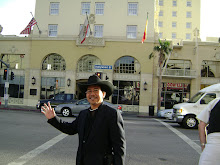
A while ago, I had four pictures downloaded from My Pics folder. When the pics were downloaded, publishing became a difficulty. I don't know what happened. I wanted to place a face in here like I did in my other blog since a reader has emailed his comment that I have myself kept my face in the dark. For him and anyone else who may want to know me, here are my pics. My email address is in (http://www.counpsychphil@blogspot.com). Just click it and read through the blogs. Even my celphone numbers are there.
The first pic was taken in Baguio at the Mansion when my sister came with her husband and two daughters together with my other sister. The other pic was in one of the islands of 100 Islands, Pangasinan in the same trip with my sisters. The third pic was in Subic's Ocean Adventure during our community outing. The fourth appears like a presidential address during the 2006 Annual Convention in Manila Pavilion. No, I was just introducing the poster and paper presentors who were to receive some certificate of appreciation for gracing the convention with their posters and papers.
There it is. I am no longer in the dark. Thanks Jun. God bless
Sunday, December 10, 2006
Advent & John the Baptist: 2nd Sunday of Advent 2006 Reflection
Every 2nd Sunday of Advent, whether it be Year A, B, or like this year which is Year C, we are always introduced the person of John the Baptist, Jesus' cousin, Mary's cousin Elizabeth's son. I'd like to share here my thoughts for my homilies which I delivered in the Eucharistic celebrations for today.
We are given this person John the Baptist in the context of his times. He was supposed to be a memorable personality because he was one of those whom Herod beheaded. These data only prove to us that the Lord we believe in and wait for at the time of Advent, and beyond of course, is a real person. At least John the Baptist knew Him, and testified to Him. As many homilists and commentaries for today have pointed out, the Lord Jesus is not a fiction of the mind. God became flesh in Him, and we have seen Him, as the Gospel of St. John the Evangelist has further written. The reality of the Lord thus becomes evident when we are shown John the Baptist.
I often received text messages in my cell phone from people who are not in my list. I used to simply ignored them. Even in my email, there appear now and then, names of senders whom I don't have memories of. I used to spam them. For me, nameless and faceless senders are common in this hi-tech world we live in, and the feeling of being in the dark often catches me anxious. My way of coping would be the silence of ignoring. But there was this particular sender whose email must have been simply so clean the spamming feature of my email provider failed to shut him out of my inbox. Hence I decided to write him, asking him to refresh my memory of him. I further encouraged him with this thought: even God showed Himself; He gave us a face we could recognize in the light: Jesus. You might want to imitate Him and come out into the open rather than stay in the darkness of anonymity. He replied, telling me that we met at a wedding in Makati. As he narrated the occasion, the memory of that night at a reception of a wedding I had just solemnized came back like a film. We were all sgtrangers in that table, but since the wedding was a happy occasion, we broke the ice. What struck me further was his mention of the walk I had after the meal while looking at the enlarged wedding pictures of the bride and groom. It was there where we talked and got to really know each other. It was there that I gave him my email address. He even sent me a picture of him, and the memory became alive again. I had to reply back with joy and gratitude as a happy moment of my life was rekindled. I had to admit to him that honestly my having forgotten him and that wedding night may have made me think negatively of him. Indeed, like the emails and text messages I receive, John the Baptist brings back to us the reality of the Lord we have met in our lives: at baptism no matter how young we were; at the Eucharistic table no matter how awake or drowsy we may have been; at the religion classes we attended in class and in Church no matter how forced we may have felt at attending. John the Baptist thus serves as a memory retrieval device, if I may use the term.
As I searched for more thoughts in the internet, I read Fr. Cantalamessa's commentary for today's readings. He said: "The traditional prophets helped their contemporaries look beyond the wall of time and see into the future, but John helps the people to look past the wall of contrary appearances to make them see the Messiah hidden behind the semblance of a man like others. The Baptist in this way inaugurated the new Christian form of prophecy, which does not consist in proclaiming a future salvation ("in the last times"), but to reveal the hidden presence of Christ in the world." My understanding of his thought goes this way: the prophets of the Old Testament foretold of something yet to come. But John the Baptist as prophet told us about the Christ, long foretold, and is already in our midst. This thought thus further heightens the mystery of Advent: we await for One Who is actually in our midst already. Advent thus becomes a moment of opening ourselves to the presence of Christ "coming" to us. The future "is already but (the) not yet," a phrase we were taught in Eschatology. It is here that the significance of Advent for this year gets its inspiration.
We have recently been battered in the Philippines by four super typhoons. Reming was the worst because it had left so many dead and yet more homeless and nearly hopeless. Here in Manila, classes were suspended for us to prepare to avert what we experienced when Milenyo ravished the place last September 28. Even though Reming skipped Metro Manila, I felt the desire to see for myself how this Reming would fare. I saw for myself the cruel winds and rains of Milenyo the killer typhoon. Hence, I waited for the television footage in the late night news. There I first saw a woman saying before the reporter: "Wala na kaming Pasko." (We have no more Christmas [this time].) I felt a certain pinch in my heart which stirred me to ask you to please remember them this Christmas. The least we can do is pray for them, here in our Mass, in our personal and family rosaries, and even when we adore the Blessed Sacrament in the Adoration Chapel. If ever we decide to buy something new for ourselves and our loved ones, do let go of the old and share them with these people. The Churches and other non-government and charitable organizations are busy collecting whatever we can share with them. The governors of the battered provinces, as well as the people have said that they don't need money, for money can't feed them as there is virtually nothing to buy. Everyone seemed to have been affected. Food, so basic and yet so scarce is what they need so badly. Ricefields and vegetable gardens where they could get some subsistence were all ravaged cruelly. Roofs were simply blown away. The floods have carried many houses, including the weak, burying them under mud and sand. If we shall be celebrating the birth of Christ this Christmas, and thereby remember that we have shared even the least to these people of Albay, Sorsogon, Catanduanes, Mindoro, Marinduque, and many other areas, then we shall have really celebrated the joy of His birth in our midst. Our sharing with them would have then become our clear message to Christ: "Look, Lord, we are ready for more of the life You want to give us with Your coming."
The Immaculate Conception & Advent
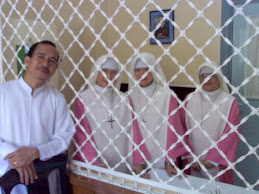
While preparing for my homily for the Solemnity of the Immaculate Conception, I caught myself waking up from bed one morning asking the question "What's the connection between the Immaculate Conception and Advent?" We all know that the Immaculation Conception "cuts" through the Advent Season, and oftentimes we go through life as Catholics without having reflected upon this "cutting." Hence I wrote the following thoughts. I first gave it as a conference to the Pink Sisters, the third congregation founded by our common Father and Founder St. Arnold Janssen last Tuesday, Dec. 5, 2006. I also gave this reflection to the communities I got invited to celebrate the Eucharist for this year's Solemnity.
The Church's Dogma of the Immaculate Conception
The Church dogma on the Immaculate Conception, declared in 1854 by Pope Pius IX, tells us that God the Father had kept the Blessed Virgin Mary free from the stain of original sin. That is what "immaculate" means, to be free from stain, to be totally clean. Since all of us born into this world share in the sin of our forefathers and ancestors as early as Adam and Eve, Mary's Immaculate Conception thus reveals a particular privilege granted her in view of her pending motherhood of the Savior, our Lord Jesus Christ. This salvation given her is one of "anticipation." A beautiful and convincing article describes the analogy of two people and a pit. A man, (and everyone who falls into the pit for that matter), who gets a hand reaching out to him gets "saved" from the pit. The Blessed Virgin, about to fall into the pit, has a hand reaching out to her before she falls, thereby also getting "saved" from the pit, and without having been mired by the dirt of the mud in the pit. Indeed what a "glorious" salvation she has been given. This must be the meaning of the Greek κέχαρίτομήνη, Mary's being "full of grace," a characteristic quality which we Christians hold about Mary, something she was given from the moment of her conception onwards.
Advent and the Immaculate Conception
This Solemnity of the Immaculate Conception, placed in the context of the Advent season, heightens the ideas of preparation and waiting. God Himself prepared for the coming of His Son by keeping Mary free from the stain of original sin which all human beings share with the first parents Adam and Eve. Thus, if the Church asks us to prepare for the coming of the Son, we are shared a model - God Himself - preparing for His Son's coming. We can hereby say that when we faithfully prepare for the coming of Christ, whether it be the Parousia or His Birth, the act can be said to be divine in itself. We share with the Father this active desire to have for the Lord a ready place when He comes.
Of course waiting comes immediately with the thought of preparation. Preparation is actually an active stance of waiting. We wait for someone we know. And when we look at our experiences, there are times when we wait also for someone we consider important. And most of all, we wait especially for someone who said he will come. Our waiting reveals to us the value we give to the one we await for. The preparations we make as we wait show the joy we have for the one who will come. Our preparation as a sign of our waiting manifests our faith in the promise of his coming.
In the Immaculate Conception, we have seen for ourselves the Hand of God that kept Mary from being mired in the dirt of the pit (of original sin). That Hand of God has also kept Mary from the trauma of having "fallen" into the pit. In these recent days here in the Philippines, two men fell into a well which the owner had requested opened and cleaned after a long time of keeping it closed. There was a water shortage in the area, and remembering the well that was closed for a long time, he called for a company to have it ready for home consumption. The first man went in and started to brush the concrete circular walls down the pit. But he accidentally lost his grip and plunged into the water. The other man tried to save his companion, and upon reaching out to the hand of the one in the water, he couldn't take the weight of the guy, hence he also slid into the water. The well was more than 100 feet deep, and efforts to save them proved futile until the decision to siphon out the water was chosen. The bodies of the two were taken out only the next day, lifeless of course.
Granted that both were saved and continued to live, they would most likely have agonized through the memory of falling. The harrowing experience of falling into the pit can give temporary memories of helplessness and inadequacy which oftentimes reveal to them some weakness in their part. Those who have weaker egos further weaken with this experience, and self-blaming may ensue. There are people I've talked to who've gone through traumatic moments in life, and who manifest signs of difficulties in their faith, often asking "why God allowed it to happen" to them. Having been saved thus becomes an occasion to learn from that dreadful moment, and the salvation becomes an occasion for deep gratitude. Mary's Magnificat "My soul proclaims the greatness of the Lord, my spirit rejoices in God my Savior" only shows the deep gratitude she must have felt being given such a great honor and dignity in this way of salvation.
Hence, in the Immaculate Conception, we can see the love of God for us so evidently real as to renew everything despite all the sins we may have committed all our lives, and all the lives of men and women down the generations. Her Magnificat may also become our own song as we do all our preparations for the coming of God's only Son Who comes to love and save us all.
In the Immaculate Conception, we can also see how important is the one Who comes whom we await. Like the men who fell into the pit, had they been saved, they could have shared with uswhile there in the pit for the longing they had for someone to keep them out and alive. That someone would have then become for them so important they would grab his hand as soon as it was reached out to them. At Advent, we long for the One Who can save us from our sinful world and sinful selves, and give us another chance to rebuild ourselves so that we too can save others, having learned from our own weaknesses and failures.
Implict in the Immaculate Conception is the plan of God, a promise of salvation through His Son. His Son our Lord Himself told the apostles He will come again. We hold on to this with deep faith. At Advent, this faith is called to be reignited and fortified as it strengthens us in our waiting.
May we be drawn closer to this One Who prepared for His Son. We have seen His ways, the great love through which He did it. We are full of joy like Mary, and we do believe because Christ Himself has said He will come again. When? Let it be In His Time. What matters for us is that we await with deep longing, with deep joy and with deep faith. Indeed in the Immaculate Conception, faith, hope and love are all alive and real, giving us more life, more joy and more love to share.
Sunday, December 03, 2006
1st Sunday of Advent Year C 2006
Actually, today is the first of several New Years we have every year. New Year? Yes because today we start the first day of the liturgical year C. Every liturgical year begins on first Sunday of Advent. Last year was liturgical year B. Next year we will begin the cycle again with Year A. Among the mnemonic devices taught us was to remember that this year the Gospel readings shall usually be taken from St. Luke. Last year's was from Mark. Of course, Year A has Matthew's Gospel read throughout most of the year's Sundays.
While the celebrative mood of most New Years is loud and festive, the New Year Advent leads us seems rather sober and reflective. The symbolic lighting of the 1st candle in the Advent wreath, especially on the eve, i.e., last night which was Saturday, is supposed to make us feel like we are in the darkness waiting for the light. As the Sundays before Christmas come, more candles are lit, and the light becomes brighter. It thus makes us feel that we are not meant to live in the dark but are called to live in the light.
The sobriety is also made more special because the readings usually begin with frightful things which we usually react to with fear and trepidation. The readings today, particularly the Gospel, seems to connect so easily with that of the last day of last liturgical year: it is almost the same except for a verse or two removed. We are shown a world in chaos and disorder, and amid these terrible situations, Scriptures tell us to be ready, with heads held high, "for your ransom is at hand." Fear is not to control our consciousness when such terrible things start to happen; faith calls us to be ready and watchful.
The image becomes easy to remember when typhoons are around. Television footages of the latest typhoon Reming (internationally known as DURIAN) show such a dreadful moment: strong winds and heavy rain make visibility virtually zero, trapping everyone wherever one is. When it will stop may be the concern of most, but keeping oneself and one's loved ones' safety too preoccupies the mind and heart. Fear is around us, but courage is further strengthened with love in our hearts. I saw this occasion many times in my life, and thank God for Scriptures: fear becomes something that can be overcome and gone through. The Word of God thus becomes the one factor that tips the other side for our balance. Next time fear comes to trap us, the thought that God is with us, coming to us to save us may yet become our refuge. Indeed the Lord is my true shepherd,...He is by my side with His rod and staff that give me courage.
Hence, as we wait during this advent, we do what we usually do when something good for us comes, whether it be a new appliance or someone important: we prepare a place for that thing or someone so when it comes we enjoy its/His/the other's presence. The President (GMA) was reported to attend the Mass in the seminary just a while ago, and soldiers dotted the grounds. It has become for me a fitting example for our waiting: we keep our minds, eyes, ears and hearts, our whole being awake and ready. The image of the soldiers with their arms ready to protect the President becomes fitting for us so that we also practice vigilance and keep at bay anything that shall harm the One Who will come to us in our lives. We know how sin can blind us and lull us to numbness, making us unable to recognize the One Who comes. If we are not vigilant, we might lose our lives, our jobs, our meaning.
So Advent thus becomes a fitting way to celebrate New Year in a different way: sans all the trappings that drown us, but with all the hope: the One Who comes is someone Who loves us and wants to give us more life, in fact eternal life. Awake then and be ready. Without fear, but with lots of patient waiting. Maran atha! Come Lord Jesus!
Wednesday, November 29, 2006
The Week of Christ the King
It's the last week of the liturgical calendar, and Thursday of this week. I have long wanted to write about a thought that has helped me in my priestly ministry, particularly as I prepare for reflections shared during daily Mass. It was brought about by the realization that the readings, particularly the Gospel on Sunday, being the Day of the Lord, can be the "guiding light" in understanding the daily readings at Mass. Being the Day of the Resurrection, Sunday can be compared to a big light that can shine on the whole week's journey.
Last Sunday we celebrated the Solemnity of Christ the King, a feast only 81 years old in age in the Catholic Church. Declared by the Holy Father in 1925, it seemed to have helped the world from becoming overly and uncontrollably chaotic, what with wars and dethronement of royal people from their thrones as men discovered their power over others. The declaration of Christ as King and the Church's loyalty to Him has made man think of subduing one's thirst for power over others before the power of the Eternal and Boundaryless King. With Christ as King, indeed every human act becomes tempered, and man's dignity is restored and respected.
The Gospel of Monday is about the widow's mite, instilling a sense of self-surrendering loyalty to Divine Providence. This King knows definitely our needs and with our iving, authentic and dynamic fidelity, He won't discount the best we can give for His glory no matter how lowly like the widow's last 2 cents. That she has given "more than all the rest...from her poverty" clearly signifies the kind of fidelity Christ the King is calling us to. It should even be clearer when we realize that the widow's mite is God's own self-offering to us: His only Son Himself to show us His undying and indomitable love. Would you be so hardhearted as not to be touched by His love?
Tuesday's Gospel had apocalyptic content: how everything on the altar, the costly stones adorned by votive offerings "will all be thrown down." This Gospel brings back to mind earthly reality as basically passing away, and that if we put our hearts on these material reality, it will only lead us nowhere. While every material reality has in itself "the seed of destruction", i.e., everything tends towards death, the seeds Christ the King has sown through our baptism and active Christian life tend toward life. Therefore, having Christ as our King while facing the possibilities of chaos and death gives us the right perspective in our daily living. We need not be bullied by earthly powers that only want to engulf us. When Christ is our King, all these become nothing, and we live with a clear sense of security. Indeed, as this King has said "do not be terrified; for such things must happen first, but it will not immediately be the end." Earthly kings perish, but the Eternal Boundaryless King lives forever.
Wednesday's Gospel spoke of a much more personal, therefore humanly significant suffering - that of being harried to courts and persecutions left and right BY those who know us and our fidelity to Christ the King! Isn't this such an enormous overwhelming pain when our own reject us and expose us to death! I know of a Chinese confrere whose young members in the family reported their aunts and uncles (the priest's brothers and sisters) who were Christians and belonged to the educated group during the Red Revolution. One brother of this priest was exiled to the north, in a place where he was forced to labor on dry and often snow-covered land when he had never tilled the land before because he was an educator. This King's reassurance that "not a hair on your head will be destroyed" indeed calms the nerves in the face of death and unbearable suffering. One of my classmates who managed to be freed after 40 years of imprisonment together with Cardinal Gung Ping Mei kept this in mind and he managed to be free from the daily brain washing sessions by praying his rosary using his fingers. Others can reject us, and persecute us; but the King gto whom we are constantly faithful shall be our courage.
Today's celebration reminds us of one of the apostles: ANDREW, the brother of Peter. While Jesus was crucified on the cross, Andrew and Peter also had their own. Peter was crucified with his feet up for he claimed to be unworthy to be crucified the way Christ was. Andrew was crucified to an X-cross. Our King suffered for us; and if we shall be loyal to Him, as the master is, so shall the follower be. But when Christ is our King, the persecutions we experience today cannot compare to the glory that awaits us in Him.
Indeed, the thought of Christ the King which last Sunday's liturgy has given us can constantly give us the meaning by which we can reflect on the daily readings of the week. I shall be doing that for tomorrow and the day after. Hopefully, this should usher me (and you the reader) into a new liturgical cycle that begins with patient waiting or ADVENT. May He be my King forever and ever.
Wednesday, November 22, 2006
Jesus weeps
Reflections
It's been five months since my last blog. A lot of events have happened, and I got simply too entangled that I virtually forgot about adding something. Thanks God I got this precious time to write some more thoughts to share.
The Gospel for today speaks of Jesus weeping for Jerusalem. I remember one episode of Mike Enriquez' (Philippine TV station GMA newscaster and show host) IMBESTIGADOR where a husband was shown weeping over his wife who joined a cult. Everytime he wanted to ask her to come home, she would become uncontrollably in rage. The husband was shown saying, "Kahit nagkaganyan siya, mahal ko siya." (Even if she has become like that, I still love her.) I'd like to believe that Jesus' heart cried much like this husband whose happiness included his wife.
This brings me to a story which one of our missionaries Fr. Oliver Quilab, SVD used in his reflection in the SVD Bible 2006 Diary Word in Other Words sometime last week. He quoted the late JPII's story of an Irishman who was at the door of heaven, so hesitant to get in because as he was overhearing St. Peter inquiring each one whether one has given food to the hungry, or water to the thirsty, or visited the sick and those in prison, all that was mentioned in Mt. 25 - whatsoever you do to the least of my brothers... - he simply couldn't remember one occasion in his life when he did any of those written. Everyone else was rushing in, but this Irishman was biding by his time doing his life examen.
Until Jesus took over Peter who needed to rest, and the Irishman was called. "You've been here a long time. What's keeping you from drawing near?" asked Jesus. "I'm embarrassed because I couldn't remember one single occasion when I did any of those you spoke of in Mt. 25." Jesus was surprised himself. "Not one?" Jesus chuckled. He then picked up a book of the man's life ang pored in, page by page, trying to verify the truth of the man's admission. He really couldn't find one. But he said, "wait, you had a friend who was very very sad, and here you came telling him a story, in fact it was supposed to be a joke, and that friend smiled, and since then found back his life stance?" The Irishman lighted up and said, "Yes, I remember him. He was like a brother to me." And Jesus said, "Welcome to the Father's kingdom. He was Me!"
It thus looks like Jesus would go all the way to pore through our lives, and if he'd go so far to find one to remind us of at least one moment we did, although not literally as has been written, but nevertheless done in the same spirit, when we had responded quite selflessly. It looks like Jesus' tears for Jerusalem was his way of going so far to wash away the sins of the chosen people. And He continues to invite those who may have missed His coming before even through us. This God is really generous.
Sunday, June 25, 2006
On Vacation
I will be on vacation starting June 26, 2006 and will be back in the seminary only on July 14. My next reflections and sharings will be done then. God bless
Monday, June 19, 2006
My other blog site
This might be of interest to you. Since I am currently involved with counseling psychology, I opened a blog site. It was my first blogging opportunity, thanks to one confrere currently based in Italy. You might want to access it. Here is the address: counpsychphil.blogspot.com just click it and you will be led into the site. Happy reading. God bless
The Resurrection & The Love of God
The Easter Season of this year 2006 has been quite impactful for me as a Catholic priest. While I admit having studied and learned my theology in the Chinese language, this year was my first time to encounter the difficulty understanding the Resurrection. Hence, in one of my reflections, I remember having asked the Lord "Why did you rise again from the dead?"
It was the Sunday before Ascencion Sunday, and the text from the Gospel of St. John rang so loud in me: "As the Father has loved me, so I have loved you. Remain in my love. You will remain in my love if you do what I command you...My command for you is this: that you love one another...as I have loved you...and your joy will be complete."
Human loving seems to be quite romantic, but selfish. My experience in the clinic assessing marital cases for declaration of nullity by the civil and Church courts has shown to me what human loving is all about: it can be filled with passion and desire, but as the years go by, love dries up. Our human friendship also show the fickle nature of love. Once one of the parties starts to show some negative traits, a gap starts to creep in between the bond. Human loving seems to last for only as long as the other remains to be good. But when the other starts to hurt the other, the love is challenged. If we love the way we love, we most likely would fall out of love.
I was once assigned for chaplaincy at Lourdes Hospital. At 6AM, the phone rang from the emergency. A man was being revived by the nurses and doctors at the emergency room. The wife was busy picking the pockets of her husband's shorts as the doctors were pumping the chest of the man. I busied myself anointing the man. As soon as the doctors stopped and told the woman that her husband is gone, the wife started crying out with these words: "You said you'd love me and wouldn't leave me. Now where is your love. I cannot believe in your love anymore." This incident showed to me what death can do: death can falsify love!!!
AHA! Now I know why Christ had to rise from the dead! The Father has risen His only Son back to life because that was the only way to show the world what LOVE REALLY IS: It calls the dead back to life. The love of God is such that it can wait for the dead to rise back to life. And only the one who loves also rises in obedience to the One Who loves and calls him back to life.
No wonder the Church always goes back to the table of the Eucharist because it is here where each member receives the One Who can love with us as He loved us. It thus becomes possible to say in the words of St. Paul: "The life I live is no longer mine. It is Christ Who lives in me." Each one is gifted with the call to rise from our deaths and daily dying.
May we love as Jesus has loved us.
Subscribe to:
Posts (Atom)